Instructors
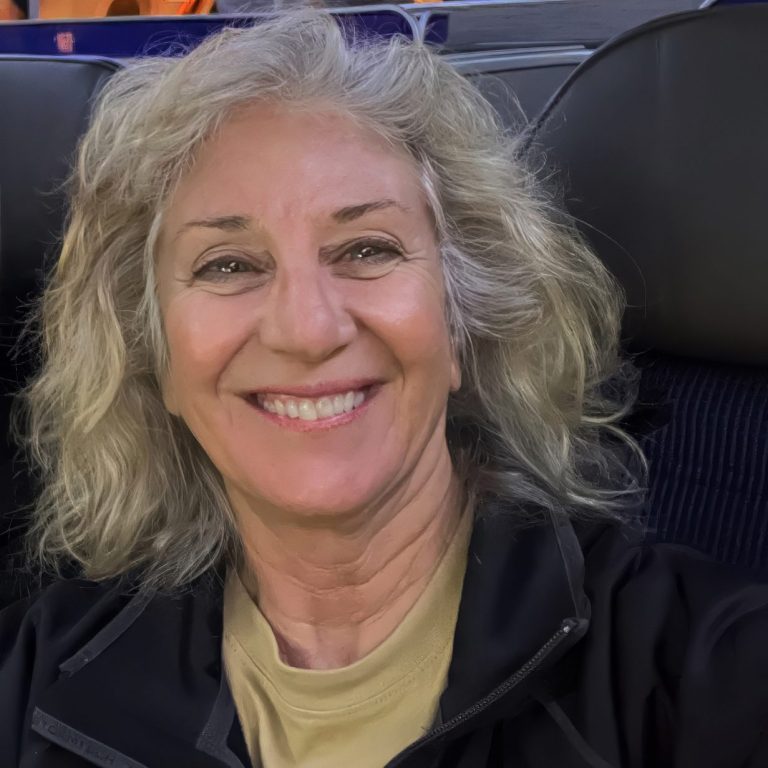
Sheila Haddad
Daishihan, Co-Host
Since when have you been training in Bujinkan?
1989
Why do you train Bujinkan?
Having trained in other arts, I found that Bujinkan gave me a freedom I did not find anywhere. The ability to create almost limitless henka is so satisfying, and promotes continued learning. I never can be bored. There is no right or wrong, only what works.
Areas of focus or expertise within your Bujinkan training?
I don’t know how to answer that. Training for so long I have done everything. I would say my strengths at this point are in very subtle areas of movement. I like to take the big movements, or kata, and make them small and effective. I have had over 20 years of sword training, that also is a strength. I find this a difficult question because area of focus or expertise depends on the timeline of my training. For example, if you asked that 10 years ago, the answer would be different. And getting older pushes me in the position of finding subtle ways of moving. What I currently teach is not for beginners but those looking to deepen the inside of technique, connection, intuition, controlling space and the mind of the opponent.
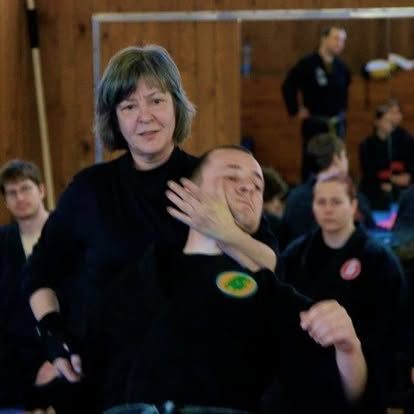
Mariette Van der Vliet
Daishihan
Since when have you been training in Bujinkan?
1984
Why do you train Bujinkan?
My martial arts journey started in 1977 with boxing, then Taekwondo and in 1984 I stepped into the complex world of what was then called Ninjutsu.
Like most of us who started in the early eighties I travelled to other countries to train with many instructors to gain more knowledge. I spend almost four decades training directly with Hatsumi Sensei and the Japanese Shihan, attended 32 Taikais and organized two Taikais in the Netherlands in 1996 and 2000
Areas of focus or expertise within your Bujinkan training?
I am a generalist and not specialized in a single weapon or in a single school and that is, for me, the essence of Bujinkan Taijutsu.
The practice is as much about global connection and lifelong learning as it is about the technical application of our art.
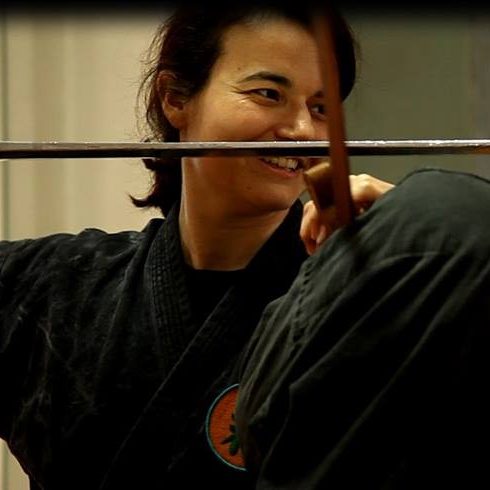
Cinzia Dolcini
Daishihan
Since when have you been training in Bujinkan?
Since '90s.
Why do you train Bujinkan?
I fell in love with this discipline from the very first moment I began training, and that feeling has never faded. The wide range of techniques—practiced both with and without weapons—alongside the depth of teachings within the Bujinkan makes it an exceptionally rich and fascinating art. Through the Bujinkan, I have been able to grow not only as a martial artist but also as a human being. Training is something I deeply enjoy, as it represents an ongoing journey of exploration—both of myself and of the mysterious facets of Nature.
Areas of focus or expertise within your Bujinkan training?
There is no single specific area of expertise, as everything within the Bujinkan is deeply interesting to explore and discover. My academic background in Japanese language and culture at Ca’ Foscari University in Venice - where I graduated with a thesis on the history of ninjutsu -, together with my years of living, working, and training in Bujinkan in Japan, has allowed me to build direct and valuable connections with the Great Japanese Masters of this discipline. This has helped me immerse myself in the depth of this art, enjoying its richness and breadth, and bringing out some of its key concepts and key techniques in my training.
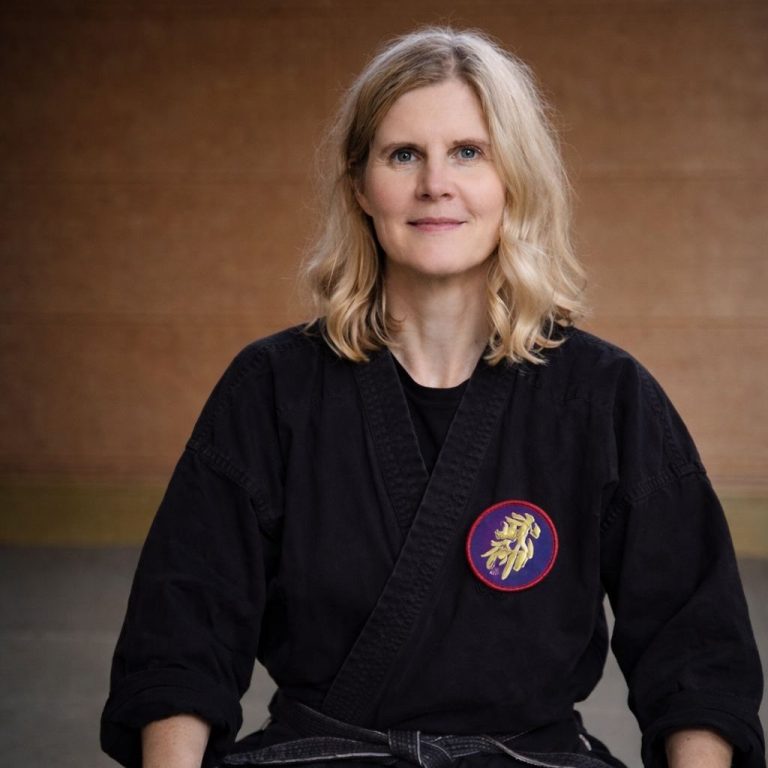
Beate Nikl
Daishihan
Since when have you been training in Bujinkan?
1990
Why do you train Bujinkan?
My journey began with Judo when I was seven years old. In Judo, training and competition were divided according to gender, age, and weight classes. I realized early on that these distinctions do not apply in real life – especially in a self-defense situation.
In Bujinkan, I found a Japanese martial tradition rooted in the arts of war, where I can develop my abilities regardless of gender, age, or physical strength. Its principles – awareness, adaptability, timing, distance, and determination – are equally relevant and applicable to everyday life.
Areas of focus or expertise within your Bujinkan training?
Bujinkan – its schools, techniques, principles, and weapons.
For me, Bujinkan is about self-assertion, self-confidence, and taking your place. Equality is not something that can simply be taken for granted – it has to be earned, claimed, and lived. This is an experience I want to pass on to other women.
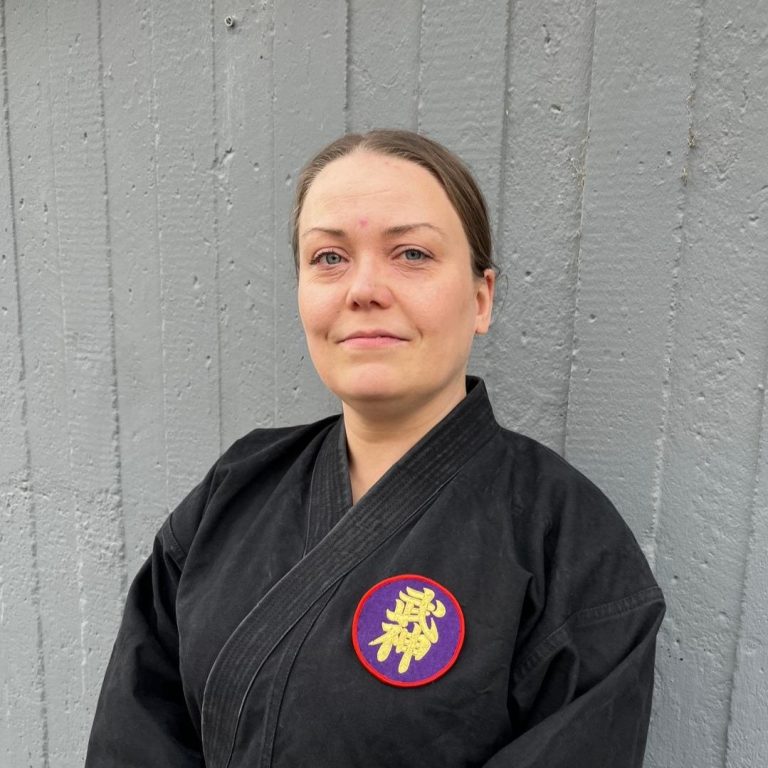
Jenni Transkanen
Daishihan
Since when have you been training in Bujinkan?
2004
Why do you train Bujinkan?
The always ongoing process of discovering how to improve myself.
Areas of focus or expertise within your Bujinkan training?
My focus in my training at the moment is working on balanced and grounded movement.
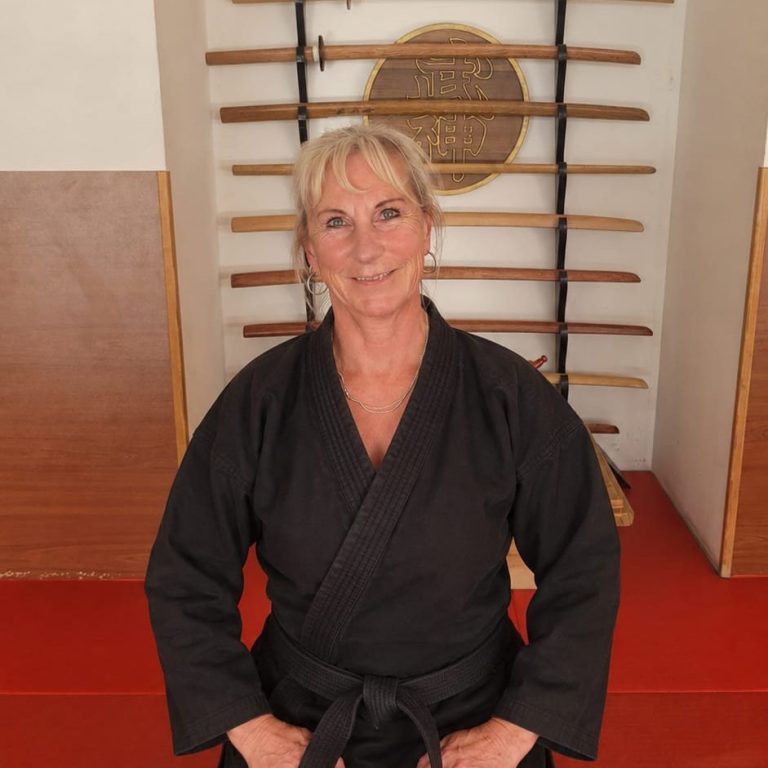
Sabine Fröhlich
Daishihan
Since when have you been training in Bujinkan?
1990
Why do you train Bujinkan?
I started out, inspired by my husband Steffen G. Fröhlich and supported by Soke Masaaki Hatsumi.
Areas of focus or expertise within your Bujinkan training?
Junan Taiso und NinYoga
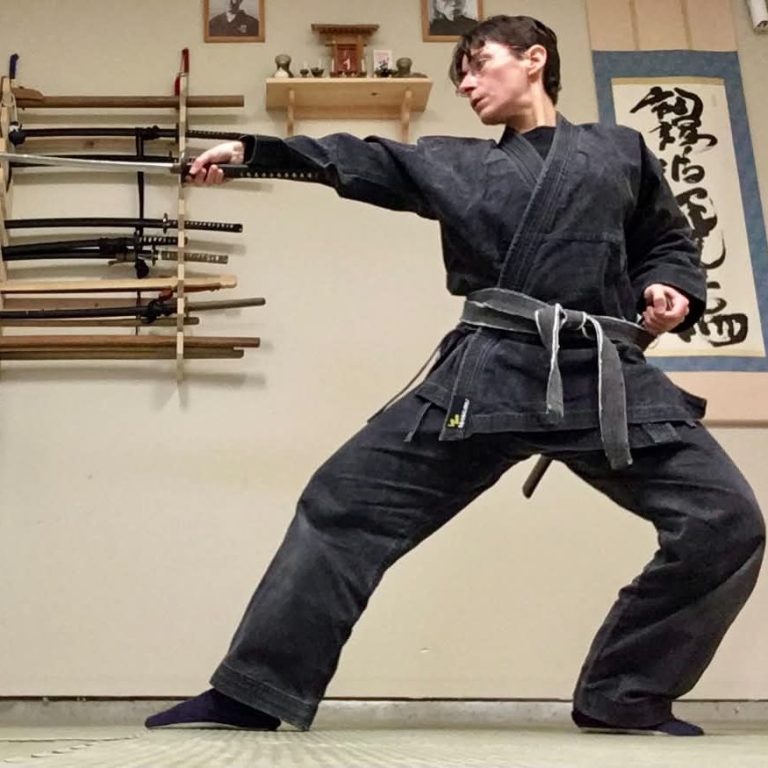
Estelle Padeloup
15th Dan
Since when have you been training in Bujinkan?
1996
Why do you train Bujinkan?
I train to study and practice Ninjutsu as a traditional martial discipline, with a focus on its underlying biomechanics and historical foundations. The training allows me to explore efficient body movement, structure, balance, and timing, while gaining insight into the classical principles passed down through the ryuha. I value the opportunity to engage with the art as a living tradition, preserving its form while deepening my understanding of its evolution and intent.
Areas of focus or expertise within your Bujinkan training
My primary areas of focus include Taijutsu and weapons training through Kihon Happō.
Exploring how kihon inform, shape, and are expressed through the study and transmission of the various Ryūha techniques.
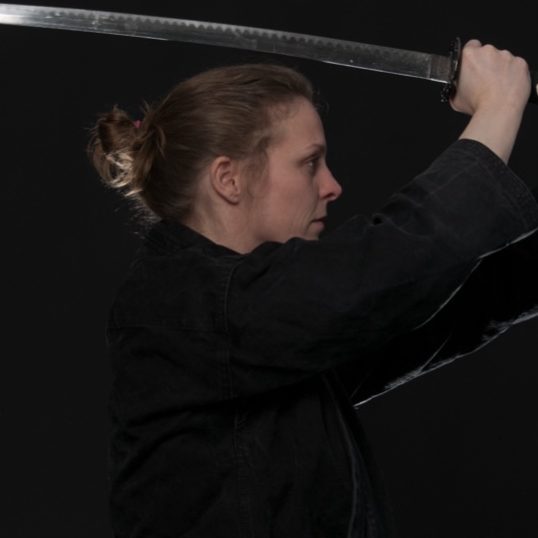
Sylvia Bleecke
15th Dan
Since when have you been training in Bujinkan?
2007
Why do you train Bujinkan?
I started jujutsu in 2007. On wednesday there were men in black training. It made me curious and I joined them. It’s a great combination.
Areas of focus or expertise within your Bujinkan training?
My expertise is handbo taijutsu.
At the same time in 2007 I started Jujutsu and I became second dan in 2019.
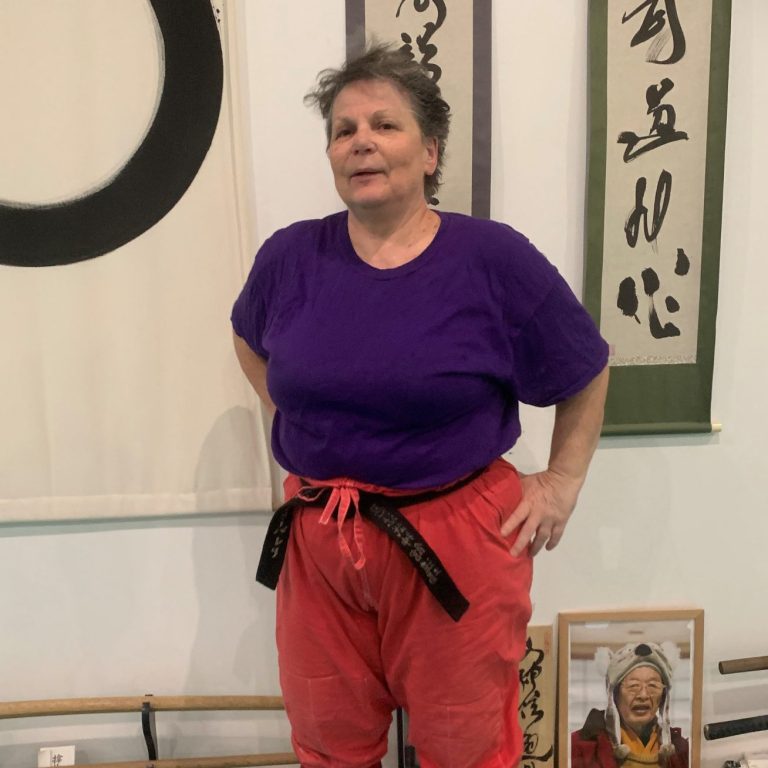
Marie-Valerie Saumon
15th Dan
Since when have you been training in Bujinkan?
1984
Why do you train Bujinkan? I was more interesting to practice than others martial Arts (too much « classic way »)
Areas of focus or expertise within your Bujinkan training?
When I started to train, I’ve had no experience … only streets fighed LOL !
Sometimes, I used some technics to control bad situations when it was necessary.
I trained during my pregnancy (gave birth three weeks after my last class)
Credo: Battles are not only for men.
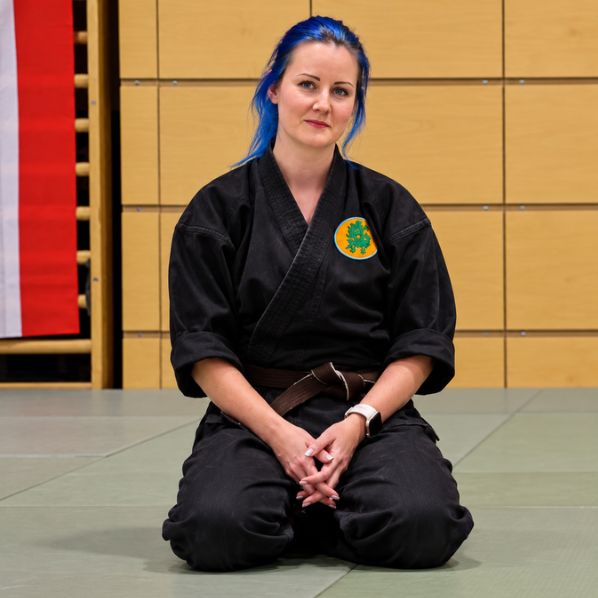
Marilis Zipajova
15th Dan
Since when have you been training in Bujinkan?
2004
Why do you train Bujinkan?
Bujinkan brings me harmony in my life. It shows that we will never stop learning. Whenever you think you know something, you will see that you know nothing ;)
Areas of focus or expertise within your Bujinkan training?
If I would have to choose, I would say nagare - the flow. Building a strong foundation in your body and mind is important, but in order to be able to survive real life, one must understand the flow.
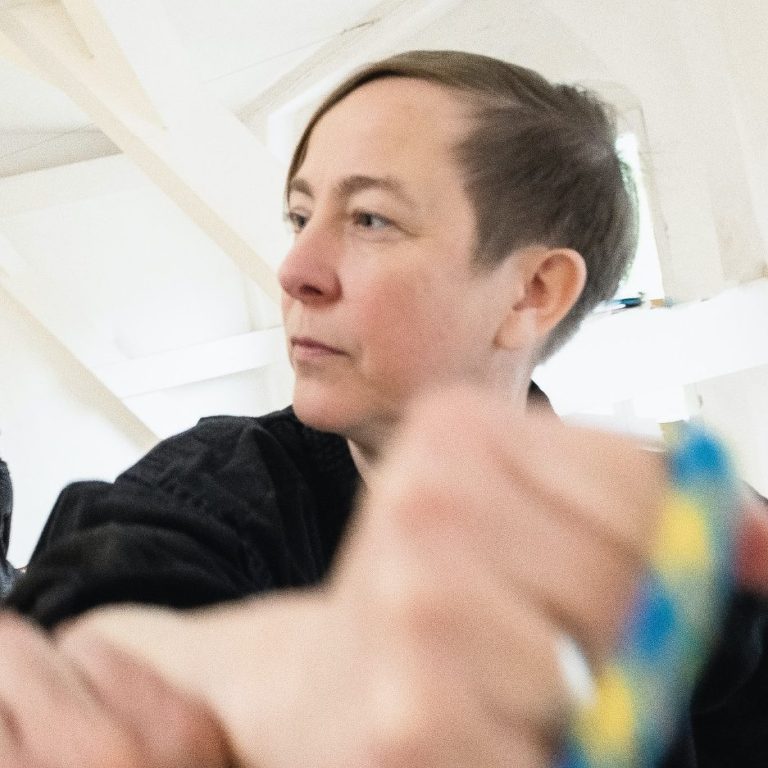
Anna Buttkus
15th Dan
Since when have you been training in Bujinkan? - 2001
Why do you train Bujinkan?
The complexity and variability make it the most appealing of the martial arts. It can accompany you throughout your lifetime, because physical strength and fitness are far less important than a knowledge of timing and distance, and a feel for your own body and that of your opponent.
Bujinkan is old and new at the same time.
Areas of focus or expertise within your Bujinkan training?
I like the feeling of movement and defense developing without thoughs and planing, to go with the flow.
Self defense for woman is another focus that I teach on a regular basis since many years.
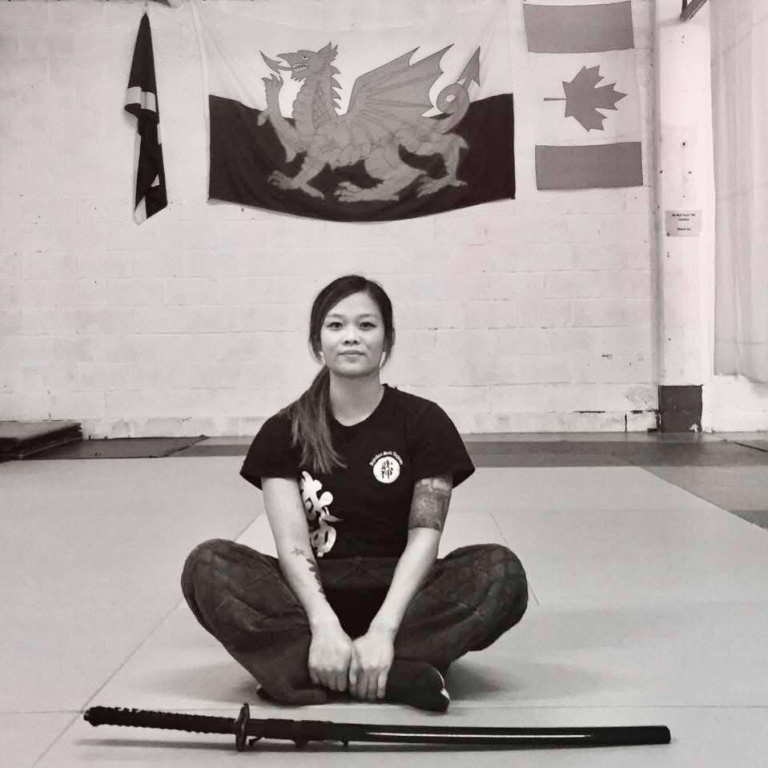
Randa Richards
13th Dan
Since when have you been training in Bujinkan?
2007
Why do you train Bujinkan?
Coming from a sporting martial art previously, the Bujinkan opened my eyes to whole a new world, enriched with so much history, tradition and philosophy.
I like the mindset it teaches. Endurance, spirit, the ability to adapt. It encourages you to delve deeper into Budo and how this applies to everyday life. There’s so much to study and explore, beyond a lifetime!
Areas of focus or expertise within your Bujinkan training?
I wouldn’t say I’m an expert in any of it ?
Though from the different schools we study that comprise of the Bujinkan, I like to explore the different concepts and principles behind them, and how they interlink.
I like the freedom of playing with movement, distance and timing and the various applications across these.
My focus is to keep developing the ability to adapt and interchange my taijutsu, so I’m not reliant on any specific thing.